
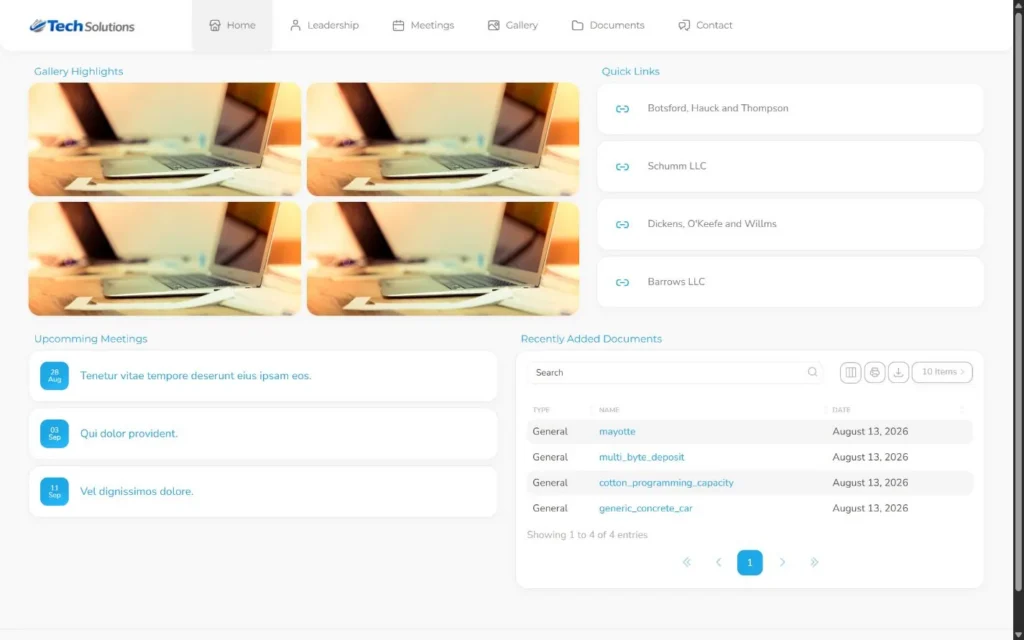
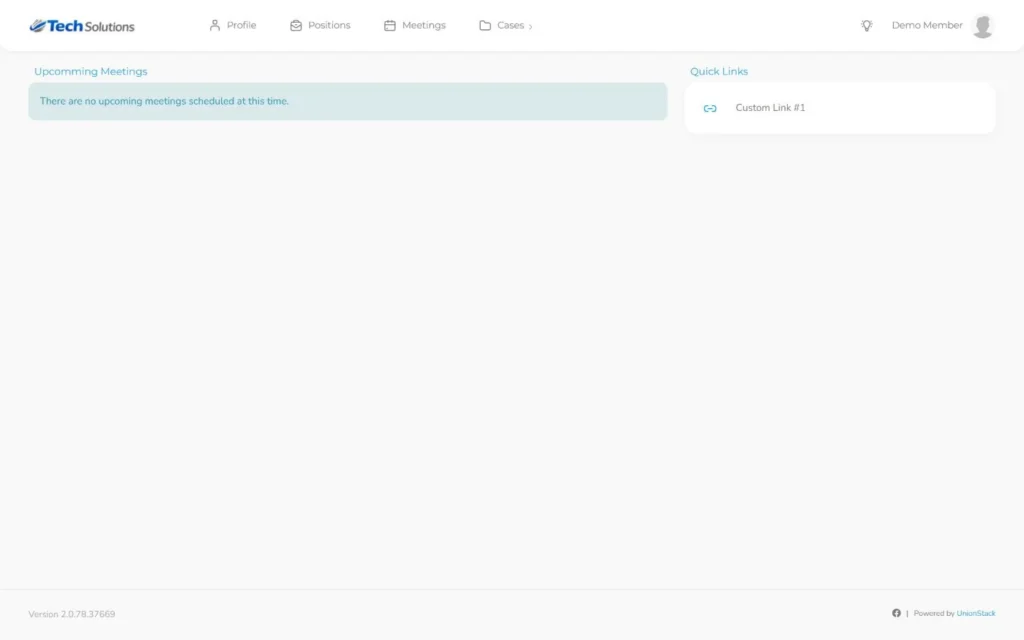
A public union website and an authenticated member portal serve different audiences. A public site presents information intended for open discovery. A member portal begins with identity and access, then exposes only the configured experience intended for the signed-in person.
UnionStack Sites connects both experiences to records maintained in UnionStack, but the launch and governance paths should remain distinct.
Public union websites
A public entity site can represent a local or another configured organizational entity. Depending on the site configuration, it can present meetings, selected documents, leadership, galleries, quick links and contact information.
The source relationship matters. A published meeting should be traceable to the meeting record staff maintain. A leader should come from the applicable organizational role and term. This reduces the need to re-enter the same fact in an unrelated website database, although publishing still requires review and ownership.
Authenticated member portals
A member experience is connected to a configured people type and the signed-in person’s records. It can expose profile, position, meeting, case-type or connected entity navigation according to the implemented configuration.
Authentication does not decide every authorization question by itself. The team must test which records a representative member can see and how visibility changes when the person’s position or organizational relationship changes.
Plan the audience before the design
For every content type, decide whether it is public, member-only or operational staff information. Do not publish a document simply because it is connected to a public entity. Use an approval process that identifies the content owner, reviewer, publication date and removal or replacement conditions.
Public and protected navigation should be tested separately. A link hidden from the menu is not proof that a record is protected.
Configure identity, branding and domains
Each site needs a recognizable name, logo, icon, domain and contact path. Record who owns the domain registration, DNS access and renewal. Social profiles and external links should be approved and periodically checked.
Brand consistency does not require every local to publish identical information. Shared identity standards can coexist with an entity-specific site name, leadership, meetings and contact details.
Test registration and sign-in with a fake member
- Create or select a dedicated fake member with representative position and entity relationships.
- Complete the registration path using approved test information.
- Test supported Microsoft or Google sign-in where included in the implementation.
- Confirm profile, position, meeting, case and entity navigation reflects the configured audience.
- Change a test relationship and verify the resulting visibility.
- Test a mismatch and document the support and identity-verification process.
Establish content governance
Name the people who can publish, approve documents, maintain leadership records, manage domains and support member accounts. Define how quickly changes should appear and what happens when the owner is unavailable.
Review mobile layout, keyboard navigation, headings, image alternatives, link labels and document names. Accessibility is an ongoing publishing practice, not a one-time launch check.
Buyer tests for sites and portals
- Publish a controlled meeting and related document, then trace both to their source records.
- Update a leadership term and verify the intended public result.
- Register and sign in as a fake member rather than viewing the portal only as an administrator.
- Confirm protected URLs cannot be opened by a logged-out visitor.
- Change member context and validate navigation and visibility.
- Explain domain, content and account-support ownership after launch.
Connected does not mean automatically public
A connected platform can reduce duplicate maintenance by reusing structured records. It should not remove deliberate publication decisions or access controls. The union remains responsible for determining what information is appropriate for each audience.
See the detailed comparison of UnionStack public sites and authenticated member portals, then use the maintained site, domain, publishing and registration guides to plan a controlled launch.
Video demonstration
A captioned UnionStack 2.0 demonstration using fake data to review a public site before publishing.
Related product capability
Union websites and member portals
Review the product evidence, buyer guidance and connected workflows behind this article.
Explore Union websites and member portals →